Independent festivals in Aotearoa are being pushed to the edge
We talked with Shipwrecked, AUM, and some of our own team about the current realities and pressures of running festivals today.
.jpg)
Independent festivals in Aotearoa exist in a space that is increasingly fragile. Rising costs and shrinking disposable incomes have made it harder than ever for grassroots events to survive, let alone thrive. And yet, these festivals continue to return year after year, built not on profit margins, but on passion, community, and the belief in the value of shared cultural experiences.
Unlike large-scale commercial events, independent festivals are often run by small teams who wear every hat imaginable: producer, builder, mediator, fundraiser, caretaker. They create spaces where creativity, wellbeing, and connection are prioritised over commercial outcomes, and where art and music are deeply intertwined with place, people, and kaupapa.
To better understand why independent festivals matter, and what it truly takes to keep them alive, we spoke with foundational people behind Shipwrecked, Twisted, and AUM.
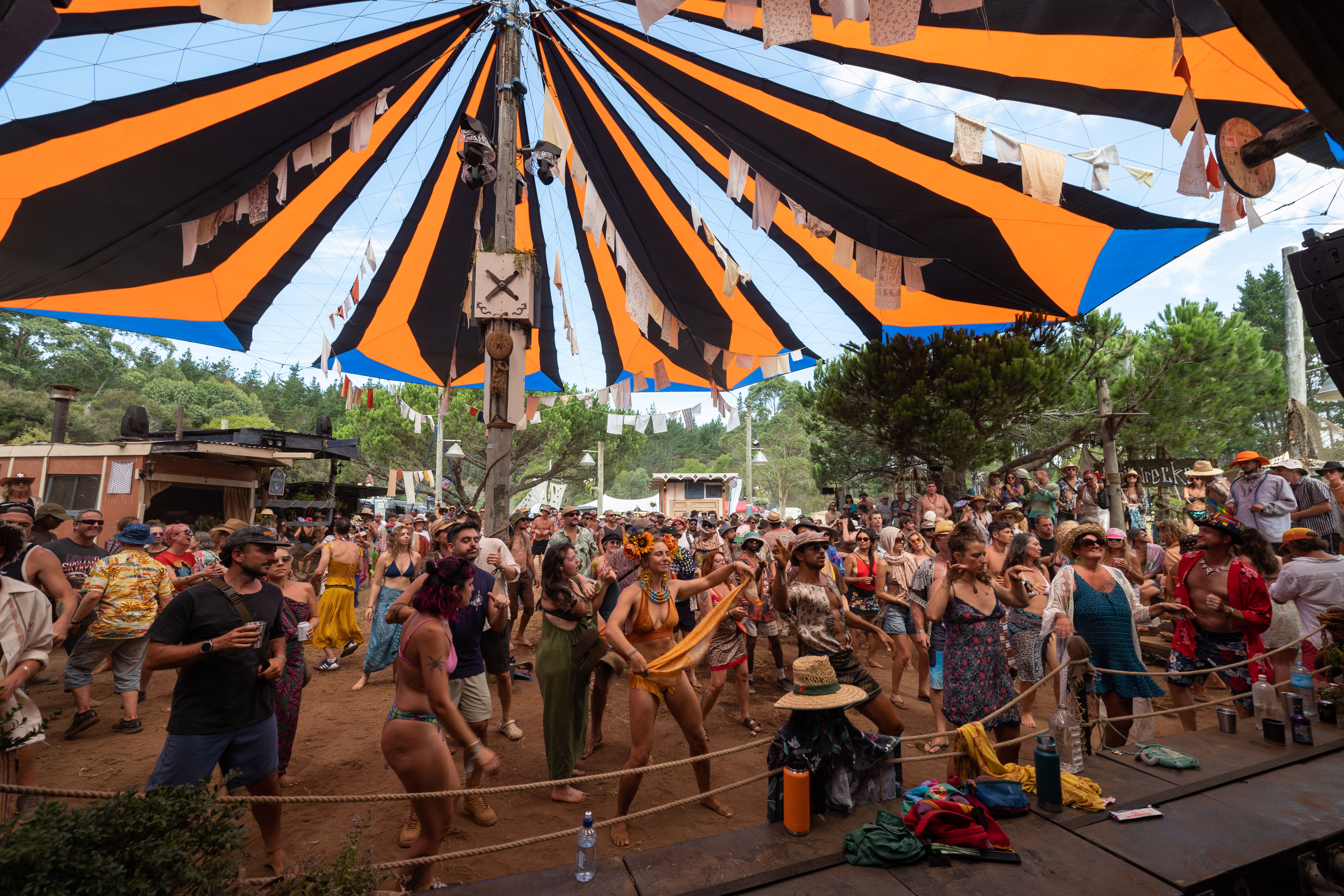
Shipwrecked
Interview with Logan Baker, organizer of Shipwrecked NZ.
.jpg)
What inspired you to start Shipwrecked?
Shipwrecked was inspired by growing up in NZ with the water surrounding us and places like Swashbucklers Restaurant in Auckland. A large boat we found on the side of the motorway, a group of now close friends, and a very cool land owner. Festivals like Subsonic, Fusion and Burning Man have been a great influence to us here in NZ.
What has helped keep the festival going each year?
The community, the land owner and amazing friends that keep me pushing through all the barriers.
What are the main difficulties you run into when running this festival?
Financial pressures have got to be the biggest challenge. Since COVID and the general economic downturn for the 95% of people in NZ, it's been very difficult for us and most events like ours to operate with such high outgoings. It's certainly been a struggle year after year. The weather has also given us significant challenges over the past 9 years, from cyclones, hurricanes and droughts. 2025 we had perfect weather and it was incredible.
A lot of articles out there say that young people are going out less, do you feel like this is true? Why do you think this?
I think it's not just young people, it's everyone. I feel that there has been a good number of young people still going out but they have no money to spend. I also think that there is a really big health trend going on and people are not engaging so much in events as they once were. That's why we also have been focusing on our wellness sector with two zones and over 50+ activities including "Mussel Beach", "The Cove" and "Lagoon Lounge".
Do you feel like the energy has changed leading up to each new festival season since when you began?
The energy has been different each year tbh. Shipwrecked always has a very exciting build up. 2025 we had the smoothest running event pre-build that we could have hoped for. It was really amazing and our team just ticked all the boxes. We have started a few months back onsite preparing our new zone "Tortuga Bay", so we are all super keen!
Why is it so important to have these independently run festivals?
Events like Shipwrecked bring together all the creatives and forward thinking ideas. It bonds friendships new and old and makes you feel like you can keep moving forward with your normal lives or not so normal lives. It's just a place of freedom to express yourself and we ALL NEED THIS.
How do you want Aotearoa to move forward in the music and arts scene?
I would like to see more top down funding to come from government and city councils to help our sector. If we, the promoters, are keeping people off the streets and away from the police, with paid security by us, then surely there should be some funding. If all festivals stopped then we would see street parties and commotion everywhere.
It's now part of culture and art, and events like Splore, Shipwrecked, Twisted and others alike should be protected and funded by government and private sectors.
With the rising cost of living and increasing operational expenses across the board, how have these financial pressures impacted the viability of running your festival, and what changes (if any) have you had to make to keep things afloat / sustainable?
Firstly, I would like to say that Shipwrecked has never been viable. It's always been a huge challenge and many times I personally have had to pay for it to keep going. I have another business, plumbing and gasfitting, and in my younger days when I could work 80 hours a week, that's what I had to do. Another thing is that we are investing all the time in gear and infrastructure so that we can have a festival like Shipwrecked. That's why we stand out over the other events that just have a stage, sound and lights, which is 90% of the events in NZ.
The government made a $70 million investment into bringing in overseas acts to NZ. This however does not help the smaller independent festivals around New Zealand. How do you feel about this? How do you think the government could help keep the underground music scene afloat during this time?
I think that the government has not made any good decisions since being elected, so what can I say. They have done a terrible job, full stop! The funding should be going to local festivals and events that have been operating for more than 5 years and should be divided out fair and square.
The way forward is to make sure that EVERYONE buys tickets early. Support now so we sell out, can budget correctly, and then we can create more events like this and carry on building the strengths of our community stronger.
Hopefully we see change by inspiring new young politicians that put the people first rather than profits. Because we all know if you put the people first, they will work hard and then the profits will come to all rather than the few.
Twisted
Interview with David Tait, the founder of Twisted Frequency.

What inspired you to start Twisted?
I would love to harp on about the aligned destiny of bringing something into being that would change the world yadayadayada but the truth is: We never set out to create Twisted as it is today, It was a bunch of rag tag groups of friends who were already throwing much smaller outdoor parties and decided to give something a lil bit bigger a go.
What has helped keep the festival going each year?
The endless passion from the countless legends that make the festival happen and the immeasurable amount of joy and connection that we have the pleasure of bringing to the wider community.
What are the main difficulties you run into when running this festival?
Money is the biggest one, the festival has been struggling since the beginning, Often times I've spent every single dime of my dishie/waiter/bartender wages to put it on again only to lose it all and need to take loans or rely on the goodness of suppliers and team members who are willing to wait until we have the coin together again to settle our invoices. We are 11 years in and although the festival has grown massively, so has the cost of running it and the two have never really evened each other out despite enormous amounts of effort improving our book keeping, budgeting as tightly as possible and doing our best to improve revenue. It feels like it's never been sustainable and that is a tough thing to admit in a public way like this but its the reality that we need people to know because its gotten to the point where it either needs to be put to rest or we need to find some other way to make it viable for it to continue. The difficulty that affects me the most is the vast swathe of interpersonal elements that need careful attention and huge amounts of emotional energy to manage. Because of the community lead and run model, which is something that is crucial to the authenticity of it, hundreds of people are committed to whichever aspect of Twisted that they are involved in, They rightfully see the issues that face them or people around them as the collective responsibility of the community itself and because im at the helm of it, there are countless situations year round where my empathetic nature and delicate heart are put to work. Breakups, Money, Arguments, Consent Breaches, Substance addictions, someone didn't get the set/set time they wanted and are feeling undervalued, basically every other possible issue you could think of land on my desk which I’m expected to promptly take action on despite most of these things having little or nothing to do with the festival aside from the people involved attending or being part of it in some way. Because I care and because Twisted is more than a festival it is a straight up family, I need to take the time to carefully listen, communicate gently and oftentimes be the mediator between folks or step well outside my comfort zone/beyond the call of duty to find solutions. I was saying to a very close friend and mentor today that it's like being the village chief who is in charge of keeping the peace and ensuring a prosperous society. I love most of the people I am talking about and I also wouldn't have it any other way because I have a deep feeling of gratitude for them and their contribution to the project that they hold so dear but goddamn it is heavy on my shoulders.
A lot of articles out there say that young people are going out less, do you feel like this is
true? Why do you think this?
Money again. Most people even on more than minimum wage can't afford to drink in bars, one night on the pints can wind up being half their rent.
Do you feel like the energy has changed leading up to each new festival season since you started out?
I think I have a bit of tunnel vision so might not be the best at answering that question, Almost every waking moment and many moments in my dreams as well are all dedicated to Twisted in some way or another. I do keep track of what other festivals are up to and what folks are saying about them but I don't have a real sense of what it's like from the punters perspective. I would like to think that the same crackling energy is flowing from the moment we get that first proper sunny summer day and that folks are dusting off their dancing shoes and planning their festival adventures but its fair to say especially this year the energy has been basically empty wallets and the solemn knowledge that festivals are a “nice to have” and take the last spot on the priority list for many of the people that make up our core demographics.
Why is it so important to have these independently run festivals?
Connection. Growth. Community. Creative freedom. Knowledge sharing. Strengthening bonds. Spending time in nature. The endless benefits of dancing to good music with friends and the guarantee of making new ones. There are countless more reasons for why independent festivals are crucial. Most of the things in the list above are either not possible, severely difficult, actively discouraged/excluded or just outright have the magic and potential sucked out of them by corporate greed and a lack of true understanding of what makes a festival the fundamentally life changing, fulfilling experience that they are capable of being for people.
How do you want Aotearoa to move forward in the music and arts scene?
Diversity, safety, inclusiveness, sustainability, affordability They all sound like buzz words on a vision board but they all have ramifications for the expansion of the scene which are difficult to fathom. Regarding affordability, the irony here is not lost on me, It probably sounds rich coming from someone selling a $500 festival ticket. We are forever assessing our operation and how we can improve the first four items on the vision board but the last one is HARD. We are at the mercy of the economy and that does not feel like it's going to improve anytime soon(fingers crossed I'm wrong). Last year was by far our most spectacular output to date, we had nearly 3500 tickets sold and somehow we still haven't paid off the IRD debt we've been servicing for about seven years. This year we have sold 1000 less tickets which is absolutely terrifying, we planned for a dip in sales because of the state of it but we could never have predicted such a drastic drop and we can't blame anyone other than the government for prioritizing the wealthiest people at the expense of those in lower income brackets.
With the rising cost of living and increasing operational expenses across the board, how have these financial pressures impacted the viability of running your festival, and what changes (if any) have you had to make to keep things afloat / sustainable?
Everything has become more expensive, when you are at the scale we have achieved you can imagine the compounding effects it can have, Ferries have nearly doubled in price over the years, we buy like 50 sailings a year, When fuel goes up, my spreadsheets weep, every single year we are struck with unforeseen costs that exceed the little buffer we have tried to put aside for a rainy day. When it comes to changes, believe me we have tried to find them, we have looked at every possible angle to try and produce an experience that matches the value of the tickets while simultaneously keeping true to our kaupapa. Perhaps we are just flying too close to the sun but I honestly can't see any way to fix the situation short of some kind benefactor swooping in to save the day. It might be stupid but I am not willing to compromise on the aspects of the event which make up its essence. Even the most obvious ideas that would seem like they could solve the problem like dropping a day off the festival duration or removing a stage barely make a dent in the potential outcome and so don't feel like they are worth trying.
The government made a $70 million dollar investment into bringing in overseas acts to NZ. This however does not help the smaller independent festivals around New Zealand. How do you feel about this? How do you think the government could help keep the underground music scene afloat during this time?
I'm seething about this to put it bluntly. Throughout its life Twisted has yet to receive a single dime or any kind of funding and that is not for lack of trying. I get it, On the surface we look like a bit of a hippy waste-fest and thats not the kinda thing most of the suits can get behind but if you have been before or probably even if you have a friend who has been before, You will no doubt understand how much more impactful and essential the effects of Twisted or events like it can have on people compared to a fuckin Taylor swift concert in a stadium or some “Ultra” commercial Wellington waterfront EDM bullshit. I think funding for projects like ours is about the only thing that is going to prop up the underground in Aotearoa through these trying times, when venues are closing their doors all over the country, Huge, well established legacy festivals are shutting their gates for good and the armies of incredible creators are being forced to quit their dreams and try find some non existent jobs to get by, The world becomes a sad, drab place. Innovation, diversity in the arts and community spirit are squashed to an alltime low because the fire of creativity is the light in an otherwise pretty dark world. Even the “powers that be” can understand the need for beautiful art and music and how horrible a world without it would be so it's baffling that there isn't more support for venues, festivals and individuals doing cool things.
Loosening restrictions/the red tape that can be involved in producing events and addressing noise control policies are another way that they could improve things across the board but at the end of the day, The most effective thing that would actually help is to fix the economy so people can afford to enjoy themselves and regularly buy tickets instead of rationing their small budgets so they can attend the occasional gig.
AUM
Interview with Rob Warner. Head of Marketing at AUM since 2019, and a DJ at AUM since 2016.
.jpg)
What inspired the creation of AUM?
AUM was started out of a love for proper outdoors events of the psytrance and bush doof variety. Co-founder John Paul Moss had promoted fantastic events for years and he and his partner Anna decided it was time to create a larger gathering the way they wanted it.
What has helped keep the festival going each year?
A lifelong passion for creating gatherings for friendly, wholesome people who have music and art to share with the world.
What are the main difficulties you run into when running this festival?
Time. Time. Time. Each year it seems there's less time to plan and implement each aspect, especially with the small team we have for most of the year.
A lot of articles out there say that young people are going out less, do you feel like this is true? Why do you think this?
People have more competing demands for their time than ever. It's contributed to people being more selective about where they put their time and money, whether it's entertainment, lifestyle, eating out, education, fitness etc. Music-centric events have to demonstrate their value as a priority and keep putting on great shows that offer great memories.
Why is it so important to have these independently run festivals?
Independent festivals are the backbone of the festival community. They're the ones which give opportunities to emerging and fresh talent, who push visual and performing artists into the mix, who offer people pathways to learning festival creation etc. Independent festivals are also a haven away from overly corporate/monetised environments. This comes with many positives, both creatively and psychologically.
How do you want Aotearoa to move forward in the music and arts scene?
It would be great if Aotearoa grew into the idea that art contributes significant value to society and that this was recognised at the government level by way of actions - grants, apprenticeships etc. It's hard to know where to start on that, but knowing that there are viable career paths in arts (music, performing, technical, production etc) is a must for the creative scene to prosper. Otherwise we'll keep losing talent to other fields or offshore.
The government made a $70 million dollar investment into bringing in overseas acts to NZ. This however does not help the smaller independent festivals around New Zealand. How do you feel about this? How do you think the government could help keep the underground music scene afloat during this time?
The large events investment fund won't help anyone except the already largest businesses. It is par for the course for this brand of government - they are easy prey for large businesses to lobby ideas which are effectively the taxpayer funding their aspirations. It's poorly done and seems mostly a PR effort to generate some warm fuzzies. A better path in my view would be to have an arts fund which you could apply to but which has an upper cap so events over a certain size could not apply. To prioritise grassroots and developing initiatives. That would have a greater long-term investment multiplier effect. It's a hard case to make when governments and councils are on such short timelines but it would work. I'm sure of it.
These interviews reflect how important independent festivals are in Aotearoa. These events are not just entertainment, they are accessible platforms for artists and ideas. Places where connections are built between people, the land and eachother.
Despite their contribution to our scene, independent festivals continue to operate with minimal support, absorbing rising costs, regulatory pressure, and economic uncertainty largely on their own. When funding prioritises large overseas acts and corporate-scale events, it risks hollowing out the grassroots culture that feeds the entire ecosystem.
If independent festivals disappear, the loss won’t just be fewer weekends of music, it will be fewer opportunities for creative risk, fewer community-led spaces, and fewer pathways for local talent to grow. While audience support is vital, the long-term survival of these festivals also depend on fair government policy, targeted funding, and regulatory frameworks that recognise independent events as crucial cultural infrastructure. Supporting independent festivals is not just a consumer choice, it is a public responsibility and an investment in the cultural health of Aotearoa. Because independent festivals don’t just reflect who we are, they help shape who we become. We know its rough out there so you might not be able to make it this summer but it's worth adding this as our final note: On the ground level, the best thing that you can do to help lessen the impact of the crisis facing Aotearoa music culture is BUY TICKETS.